Free No Tarmac tools / Recovery & protection
Recovery points advisor
Know which anchor points on your vehicle are actually rated — and the hardware you must never use.
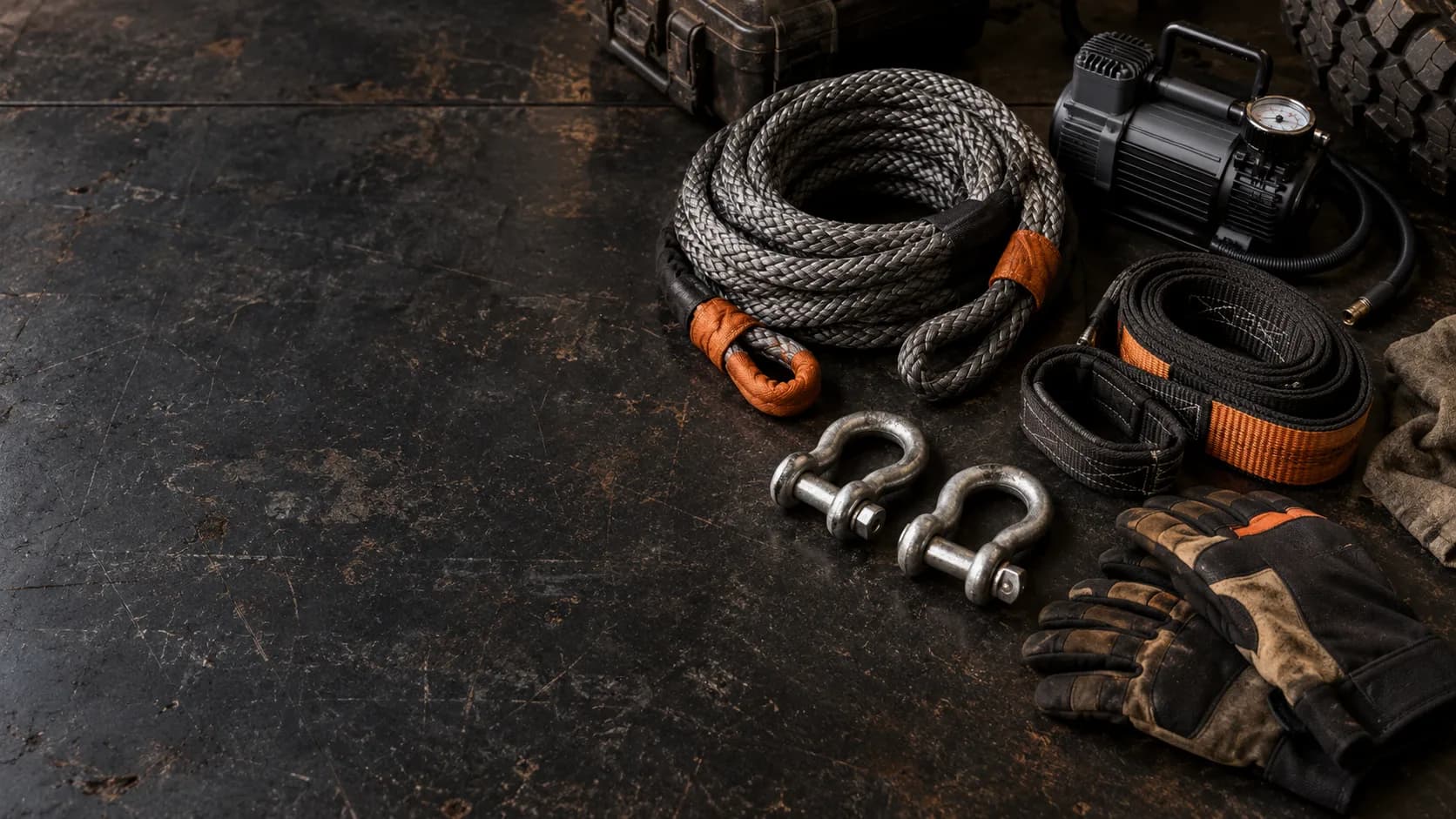
AI-generated representative scene
Quick answer
Only pull from a chassis-mounted, load-rated recovery point — your factory tow hook (if rated), or an aftermarket rated eyelet bolted to the frame. Never attach a kinetic rope, snatch strap or winch cable to a tow ball, tie-down ring or bumper skin — they fail catastrophically under recovery loads and turn into projectiles.
Why we recommend this
- A rated recovery point is the ONLY safe anchor for a winch pull or kinetic rope — it transfers the load into the chassis, not the bodywork.
- Knowing which points on your vehicle are rated (and to what) lets you set up a recovery quickly and safely, without improvising on the trail.
- Using an unrated point (tow ball, tie-down, bumper mount) transfers massive shock loads to thin metal and can fire that piece like a projectile.
Things to consider
Safety — this is non-negotiable
- A kinetic rope at full stretch puts 3–4× the vehicle's weight on the anchor point in milliseconds. Unrated hardware fails catastrophically.
- Even a correctly rated point can fail if it's corroded, bent or improperly mounted — inspect before every recovery.
Cost
- Factory hooks are free — they're already there. Aftermarket tow points cost from a few thousand rupees; rated winch bumpers are more.
- The cost of a proper recovery point is trivially small compared to the cost of a failed recovery (vehicle damage, injury).
Common mistakes
- Attaching a kinetic rope or snatch strap to a tow ball — tow balls are for trailing loads only and shear sideways in a kinetic recovery.
- Using a lashing strap D-ring or cargo tie-down — these are rated for static loads, not shock loads.
- Assuming the painted towing eye is rated — confirm in your vehicle's manual.
Safe anchors — choose the right one
All of these attach to the chassis and carry a load rating — check yours against the vehicle manual.
Factory tow hooks / eyes
Start hereAlready on your vehicle — verify they're rated.
Best for
- Most kinetic rope and winch recoveries
- Front and rear — check both in your manual
- Already chassis-mounted and load-rated
Avoid if
- The manual shows it as a 'parking/transit' hook only (not load-rated)
- You can see bending, corrosion or a loose mount
- Location
- Usually front + rear
- Verify in
- Owner's manual
Aftermarket rated tow point
A tested, marked receiver for vehicles without adequate factory hooks.
Best for
- Vehicles whose factory hooks are transit-only
- Adding a second rated rear point
- Cleaner soft-shackle attachment than tow balls
Avoid if
- It isn't stamped with a load rating — 'rated' on the listing isn't the same as physically marked
- Must have
- Load rating stamped on the piece
- Mount to
- Chassis, not bumper skin
Winch bumper integrated point
Built-in rated eyelets on a steel bumper.
Best for
- Vehicles running a front winch
- Recovery points that also mount the winch — one rated assembly does both jobs
Avoid if
- You don't run a winch — a dedicated tow point is lighter and cheaper
- The bumper isn't rated for winch loads — mounting a winch to an unrated bar is as dangerous as a bad recovery point
- Mount to
- Chassis rails
- Rating
- Must match or exceed winch pull
What you must NEVER use
These are common improvised anchors that cause accidents — know them and avoid them.
Tow ball
DangerousNEVER — it shears sideways under kinetic load.
Best for
Avoid if
- Always — for any recovery, without exception
- Risk
- Shears sideways, becomes projectile
- Rated for
- Compression only (trailer towing)
Tie-down / lashing ring
DangerousNEVER — rated for static cargo, not shock recovery loads.
Best for
Avoid if
- Always — for any recovery, without exception
- Risk
- Pulls out of floor/wall under shock load
- Rated for
- Static cargo restraint only
Bumper skin / chassis bracket
DangerousNEVER — thin sheet metal folds under load.
Best for
Avoid if
- Always — only pull from a chassis-mounted, load-rated point
- Risk
- Folds into bodywork, no load transfer
- Common mistake
- Hook over a bumper lip
Safety, inspection & care(pre-use checks, rules, after-recovery inspection)
Pre-use inspection
- Before each recovery, visually inspect every anchor point you plan to use: look for bending, cracking, corrosion, or loose fasteners.
- A bent or cracked hook must be retired — metal fatigue means a damaged point can fail well below its rated load.
- Check that mounting bolts are torqued to spec (refer to your workshop manual); vibration can loosen them over time on off-road vehicles.
- If a recovery has put a visible strain on a hook or mount, have a qualified workshop assess it before the next use.
Correct use — the non-negotiable rules
- Attach only to rated, designated recovery points — never to tow balls, tie-down loops, door handles, axles, or bumper skins.
- Tow balls are rated for compression (trailing a trailer), not the sideways and upward shock loads of a kinetic recovery. They can shear or launch under load.
- Kinetic ropes and winch cables store enormous energy — always lay a damper (a heavy bag or jacket) over the rope's midpoint so that if the attachment fails, the rope drops rather than whipping.
- Keep bystanders well clear of the line: at minimum, outside the rope's full length to either side.
After recovery
- Re-inspect the point after a hard pull — especially if you felt the vehicle lurch or heard metallic noise during recovery.
- Wash off mud that packs into threads or around mounting bolts; corrosion progresses fastest in concealed areas.
- Soft shackles used on recovery points should be inspected for cuts, UV degradation and any thread separation after each hard use.
Warranty & modification note
- Fitting aftermarket recovery points or bumpers may affect your vehicle's factory warranty for affected components — check with your dealer before modifying.
- Inform your insurer of any structural modifications; significant changes that affect crash behaviour may need to be declared.
Informational guidance only — not professional advice or a safety guarantee. Follow your vehicle and component manufacturers' instructions, verify against current local regulations, and consult a qualified specialist for safety-critical work.
Where to next
Technical notes — rated loads, shackles & vehicle-specific tips(deep dive)
How recovery loads compare to towing loads
A vehicle towing a trailer puts a steady, controlled pull on the tow ball — typically well under 1× the towed vehicle's weight. A kinetic rope recovery puts 2–4× the stuck vehicle's kerb weight on the anchor point in a fraction of a second as the rope stretches and rebounds. That means a 2,000 kg vehicle can briefly impose 6,000–8,000 kg of force on the anchor. A tow ball rated to 2,500 kg in compression will shear sideways at a fraction of that under a lateral kinetic pull.
Identifying a rated recovery point
Rated recovery points should be stamped or marked with their rated load (e.g. 2,500 kg or 25 kN). If the load rating is not physically marked on the piece, treat it as unrated. Check your vehicle's owner's manual — it should show the location and rating of designated towing/recovery attachment points. When in doubt, ask a qualified 4x4 workshop.
Shackles
Use only rated shackles (bow or soft) at recovery points. On kinetic rope ends, prefer a rated soft shackle — it drops if it fails rather than becoming a steel projectile. On a winch hook or tree strop, a rated bow shackle with a moused pin (wire-twisted to prevent backing out) is conventional. Confirm shackle rating equals or exceeds the rated pull at the recovery point.
General guidance for India conditions. Verify the specific load ratings for your vehicle's recovery points in the owner's manual or with the manufacturer, and always get training before conducting recoveries far from assistance.