Free No Tarmac tools / Recovery & protection
Winch & recovery-hardware advisor
Size it to your vehicle, run the right rope, mount it safely — and carry the hardware that makes it usable.
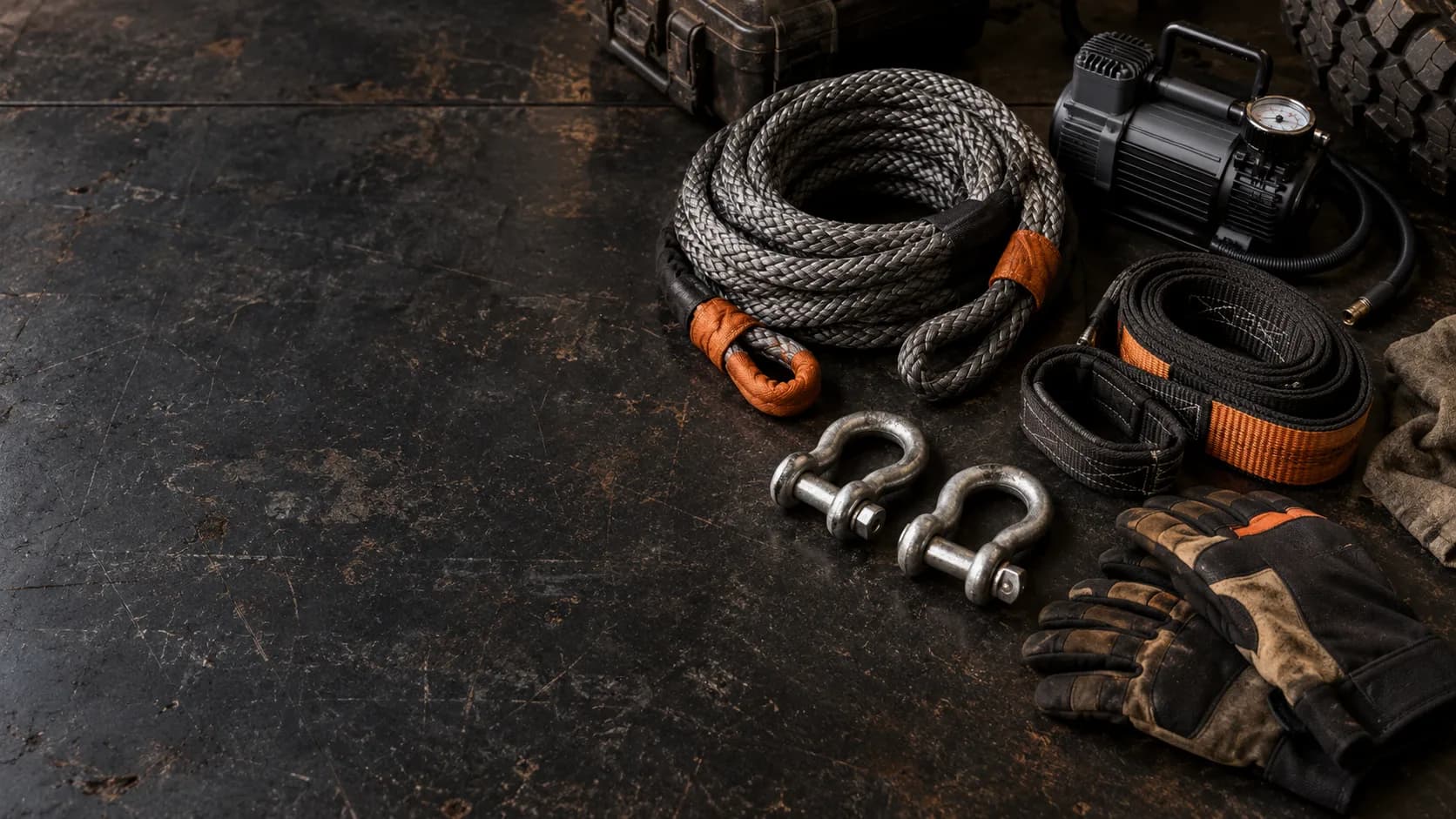
AI-generated representative scene
Quick answer
Choose a winch strong enough to move your loaded vehicle, run it on synthetic rope, and mount it on a steel bar that bolts to the chassis. Enter your vehicle's weight in the calculator below and it tells you the right winch size — then always pull from proper rated recovery points.
Get a winch setup in 10 seconds
No forms — tap your useWhy we recommend this
- A winch gets you (or a mate) out when there's no one around to pull you — the heart of self-recovery on remote trails.
- Sizing it to your vehicle's weight means it can actually move you when you're properly stuck.
- Synthetic rope is lighter and safer if it ever fails, and a steel-mounted winch bar puts the pull where the chassis can take it.
Things to consider
Cost
- A winch plus a proper mount, rope and recovery kit is a real spend — but it's the difference between waiting for help and getting yourself out.
- You also need rated recovery points and a few accessories (shackles, a line damper, gloves) to use it safely.
Trade-offs
- A winch and steel bar add weight to the front, which affects handling and payload.
- It's only as safe as your technique — winching carries real injury risk.
Common beginner mistakes
- Under-sizing the winch for the vehicle.
- Bolting it to a bar that isn't rated for the pull.
- Pulling from a tow ball or tie-down instead of a rated recovery point.
Size it for your GVM
Enter your own loaded weight — nothing is pre-filled or fabricated.
Winch-size calculator
Under-sizing a winch is dangerous. Enter your vehicle's GVM (gross vehicle mass, from the compliance plate / RC) and pick your use case to get the minimum line pull and a recommended winch class.
Enter your vehicle's GVM to size a winch.
The 1.5× / 2.0× GVM rule is standard winch-manufacturer guidance. GVM is vehicle-specific — confirm yours from the compliance plate or registration certificate before buying. Recovery is high-risk: use rated gear and correct technique, and get trained.
Rope: synthetic vs steel
Synthetic rope
RecommendedLightweight, safety-first.
Best for
- Safer failure (drops, doesn't whip)
- Easier, lighter handling
- Most trail & touring use
Avoid if
- Constant abrasion over sharp rock without a sleeve
- Fairlead
- Hawse
- Min wraps
- 10
Steel cable
Cheaper, abrasion-tolerant.
Best for
- Rocky, abrasive environments
- Lowest cost
Avoid if
- You want safer failure behaviour
- You want light handling
- Fairlead
- Roller
- Min wraps
- 5
The hardware that makes it usable
A winch alone isn't a recovery kit.
Snatch block
Doubles pull, re-angles the line.
Best for
- Hard pulls (halves line speed)
- Changing the pull angle
- Effect
- ≈2× pull
Rated points + soft shackle
The only things you pull from.
Best for
- Winching from a rated recovery point
- Soft shackle on kinetic ends
Avoid if
- Tow balls / tie-downs — never
- Rule
- Rated only
Line damper
Drops the line if it fails.
Best for
- Every single winch pull
- A bag/jacket works in a pinch
- Use
- Always
Safety, ownership & compliance(installation, maintenance, legal & warranty)
Battery & electrical system
Winches demand significant power — verify the electrical system can handle it.
- Before installation check battery condition, alternator capacity, cable sizing, fuse protection and connections.
- Vehicles with several accessories may need upgraded electrical components.
- Run the engine while winching where practical to maintain voltage; watch engine temperature on prolonged recoveries.
Inspection & maintenance
- Regularly check rope, fairlead, mounting bolts, terminals, drum, remote and solenoid; service per the manufacturer.
- After every recovery, inspect rope, fairlead, recovery points, shackles, tree protectors, snatch blocks and hardware — and check the mounting bolts and winch cradle for movement, cracking or deformation before using the winch again.
- Replace any damaged recovery equipment before the next use.
- Disconnect or isolate the winch remote before servicing the winch to prevent accidental operation.
- Let the motor cool between long pulls — continuous heavy pulling overheats it; after prolonged winching, let the battery and charging system recover before another heavy pull.
Synthetic rope & environmental care
- Wash synthetic rope with clean water after mud or sand, and let it dry fully before storage.
- Inspect for abrasion, cuts, flattened sections and UV damage; replace damaged rope immediately.
- Keep synthetic rope away from hot exhaust components and sharp edges — heat and abrasion rapidly weaken the fibres.
- Re-spool the rope neatly under light tension after each recovery to prevent bunching and rope damage on the next pull.
- After water or muddy recoveries, clean the winch, inspect connections, clear mud from the drum and re-lubricate where applicable.
Safe operating zone
Winching is high-risk — clear the area and keep strict discipline.
- Before winching, make sure everyone involved understands the recovery plan and uses clear hand signals or radio — only one person should direct the recovery.
- Keep bystanders well clear; only essential people stay near the recovery.
- Wear heavy-duty recovery gloves whenever handling winch rope, hooks or recovery hardware.
- Never stand in the line of pull, or near recovery points/equipment under load.
- Never step over or straddle a tensioned rope — fully unload the line before crossing.
- Operate from a safe position with a clear view; avoid standing directly in front of the winch or line.
Planning, anchors & compliance
- Before winching, pick suitable anchor points, assess direction, plan escape routes and confirm every item is correctly rated.
- Pull in as straight a line as practical to reduce stress on the winch, rope and mounting; avoid severe side pulls (they damage the rope, fairlead and drum) — reposition the vehicle or use a snatch block to align the pull.
- Use each recovery product only for its intended purpose — do not use a kinetic recovery rope as a winch extension or a static tow strap.
- Attach only to rated recovery points, tree protectors and anchors — never a tow ball, tie-down eye or unrated hook.
- Ensure installations don't obstruct mandatory lighting, plates, safety systems or airflow, and comply with applicable regulations; disclose significant modifications to your insurer where required.
Informational guidance only — not professional advice or a safety guarantee. Follow your vehicle and component manufacturers' instructions, verify against current local regulations, and consult a qualified specialist for safety-critical work.
Where to next
Advanced technical notes — drum layers, mounting & recovery physics(deep dive)
Why sizing matters
A winch pulls hardest on the bare drum and loses roughly 10–15% of its rated pull per rope layer — at a full drum it can be down by around half. That's why you size generously and, for a hard pull, spool out to a lower layer (while keeping at least 10 wraps of synthetic, or 5 of steel, on the barrel so the anchor never pulls free).
Mounting
Mount the winch on a steel bumper bolted to the chassis rails and rated above the winch's line pull — never on a bar that isn't designed and rated for it. A winch that tears loose under load becomes a projectile.
Safety
Always pull from a rated recovery point, lay a heavy damper over the mid-point of the line, wear gloves, and keep bystanders out of the line's path (at least its full length to either side). Use a soft shackle — not a steel bow shackle — on any kinetic (energy-storing) recovery.
General guidance for India conditions. Confirm your vehicle's GVM from the door placard / registration certificate, and get recovery training before you rely on a winch in the field.