Free No Tarmac tools / Armour · recovery & protection
Armour & protection advisor
Protect the parts that end a trip — in the right order, at the right weight, and within the law.
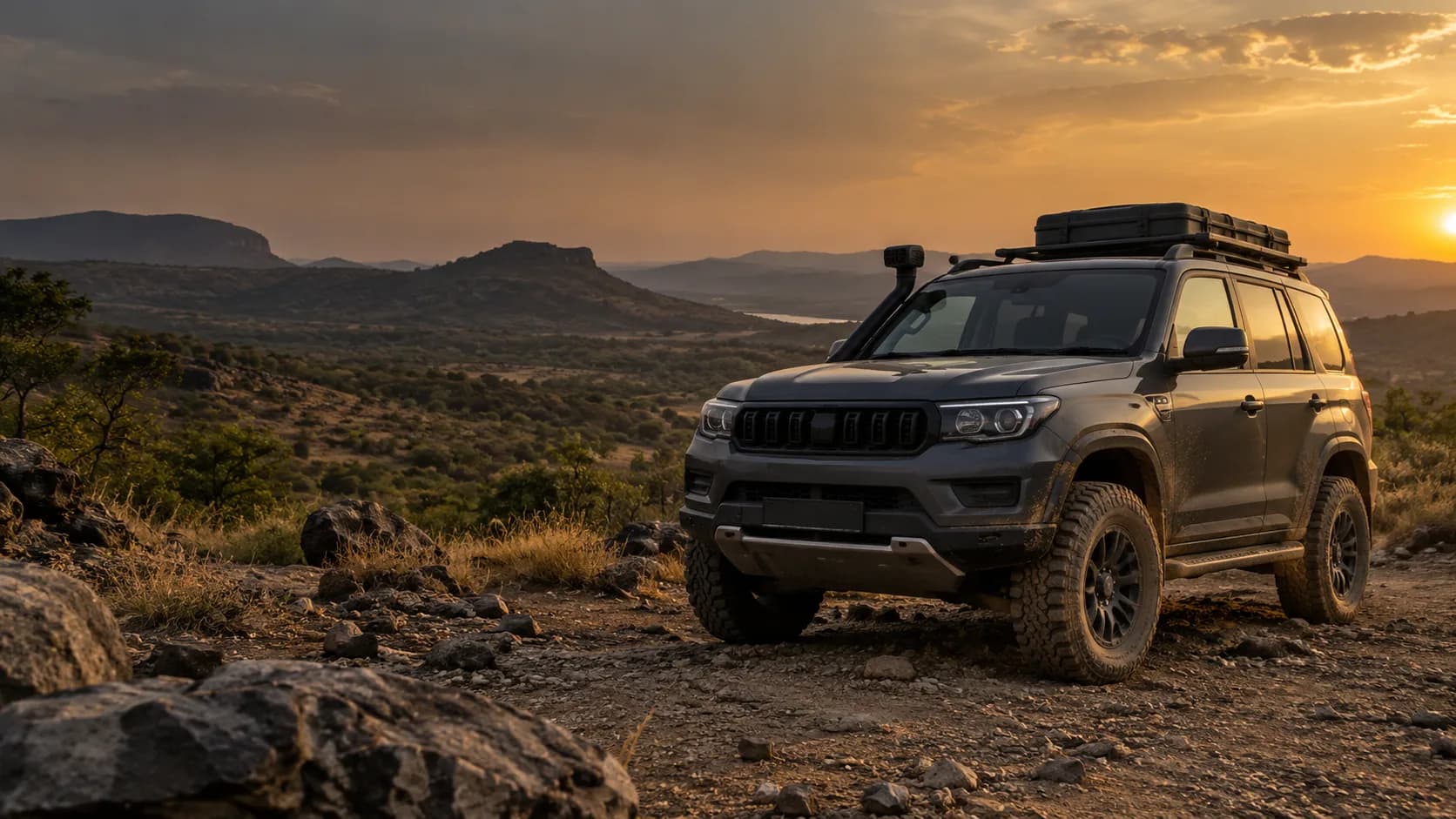
AI-generated representative scene
Quick answer
Fit protection where the damage happens: skid plates for the sump, gearbox and fuel tank first, then rock sliders and diff guards for technical terrain — all bolted to the chassis, never the body. Front bull bars carry legal and safety questions, so check those before fitting anything to the front.
Get a protection plan in 10 seconds
No forms — tap your goalWhy we recommend this
- Underbody plates and sliders protect the parts that end a trip when they're holed — engine, gearbox, fuel tank and sills.
- Fitting only what your terrain needs keeps weight (and cost) down while still covering the real risks.
- Chassis-mounted protection takes hits the body panels never could.
Things to consider
Cost
- Full underbody armour and sliders are a meaningful spend and add weight — protect the vulnerable parts first.
- Steel is cheaper and tougher; aluminium costs more but saves weight.
Trade-offs
- Every plate adds weight that eats into payload and can hurt economy and braking.
- Front bull bars carry safety and legal questions (see compliance below).
Common beginner mistakes
- Bolting armour to thin body panels instead of the chassis.
- Fitting everything at once when your terrain only needs a skid plate.
Legal
- Unauthorised bull bars or crash guards may not be road-legal and can affect airbags, insurance and safety — check before fitting (details in compliance below).
Protection at a glance
Everything mounts to the frame — never to thin body panels.
Skid plates
Sump, transfer & fuel-tank guards.
Best for
- Protecting trip-ending parts
- Any underbody exposure
Avoid if
- You never leave graded roads
- Mount
- Chassis
Rock sliders
Sill protection you can pivot on.
Best for
- Rock crawling
- Protecting the sills
Avoid if
- They're decorative side steps — not rated
- Rated to
- Lift the vehicle
Diff & steering guards
Shield the exposed axle hardware.
Best for
- Technical rock work
- Deep ruts
Avoid if
- Light trail use only
- Protects
- Axle
Winch bumper
Read legal noteSteel cradle for a winch.
Best for
- Mounting a winch
- Integrated rated recovery points
Avoid if
- It's an unrated bar — never mount a winch to it
- Mount
- Chassis rails
Safety, ownership & compliance(bull-bar law, install, maintenance & warranty)
What to protect first
Priority items are the ones that end a trip when damaged.
- Engine/sump skid plate protects the most expensive component.
- Transfer-case and gearbox plates prevent loss of drivetrain.
- The fuel tank is often the lowest, most-hit part on rough terrain — guard it.
- Rock sliders on the sills let you pivot on obstacles and double as steps.
Steel vs aluminium
Material choice trades impact resistance and reparability against weight.
- Steel: higher impact resistance and easy to hammer back into shape or weld in the field, but heavier.
- Aluminium: lighter and corrosion-resistant (well suited to touring), but can wear faster under repeated heavy rock impacts.
Weight & payload
Every accessory reduces available cargo capacity (rough installed weights below).
- Engine skid ~10–20 kg; transmission skid ~8–15 kg; full underbody ~30–50 kg; rock sliders ~20–45 kg per pair; steel bumpers ~35–60 kg front / 25–50 kg rear.
- Substantial weight may require suspension upgrades to maintain ride height and braking.
- Fit only the protection your terrain needs — extra weight on road-only vehicles hurts economy and lengthens braking distance.
Installation & maintenance
Proper fitment is everything — poor mounting transfers impact into the body.
- Bolt armour to the chassis/frame, never to thin body panels, and have it fitted by a competent 4×4 workshop.
- Re-torque all bolts after roughly the first 500–1000 km and inspect after any heavy impact.
- After mud, beach or water, wash off build-up, check bolts for corrosion and repair coating damage to prevent rust; replace damaged fasteners with the specified hardware.
Clearance & recovery access
- Choose designs that balance protection with approach, departure and breakover angles.
- Factory transport tie-down points are not necessarily recovery-rated — always use recovery-rated recovery points for vehicle recovery.
- Keep rated recovery points fully accessible — never obstruct them unless equivalent rated replacements are fitted.
- For a winch, use a steel chassis-mounted bumper rated for the line pull — never bolt a winch to an unrated bar.
Legality, warranty & insurance
- Unauthorised bull bars or crash guards may not comply with applicable regulations and can affect vehicle safety, airbag sensing, pedestrian safety, insurance and roadworthiness — verify the current requirements with your local RTO before installation.
- Chassis-mounted skid plates and rock sliders are generally accepted protective equipment, but ensure accessories don't obstruct lighting, plates, sensors or safety systems.
- Aftermarket armour may affect warranty for modified components — check with your manufacturer, disclose significant modifications to your insurer, and keep installation records.
Informational guidance only — not professional advice or a safety guarantee. Follow your vehicle and component manufacturers' instructions, verify against current local regulations, and consult a qualified specialist for safety-critical work.
Where to next
Buy it · get it installed
Advanced technical notes — mounting, materials & weight(deep dive)
Mounting
Armour is only as strong as its mounting. Bolt or weld it to the chassis/frame with graded fasteners — plates hung off thin body panels transfer impact loads into the body and can do more harm than good. Have it fitted by a competent 4x4 workshop.
Materials & weight
Steel gives higher impact resistance and can be hammered back into shape or welded in the field — but it's heavier. Aluminium is lighter and corrosion-resistant, which suits touring, but can wear faster under repeated heavy rock impacts. Either way, armour adds weight — usefully low down for stability, but it still counts against your payload (GVM) budget, so fit what your terrain actually needs, not everything at once.
General guidance for India conditions. Legality is enforced locally — confirm the current rules with your RTO.